A lot of people claim to not be very competitive in the gym. Sometimes those same people register for the CrossFit Open and immediately turn into absolute psychopaths! What do I mean? Well, our sport created a verb that describes an action taken by thousands of humans all over the world for a 5 week period each year.

That word: Leaderboarding

What in the world is leaderboarding, you ask? It’s the absolute obsession with knowing the current rankings of an athlete/athletes throughout course of the Open. “Can you use it in a sentence, please?” Yes, I can. My company lost 40+ hours of productivity out of me over the last month because I spent almost all day every Monday leaderboarding by just hitting refresh on the my internet browser so I could watch my worldwide ranking drop by the second. Leaderboarding.

Why is this an obsession for so many of us? I think there’s a few reasons:

  1. It’s crazy to put into perspective just how many people play this little game we love called CrossFit. When over a quarter of a million people sign up to do the Open, and you know that likely doesn’t represent even close to a quarter of the people who CrossFit and just don’t sign up the event, it really makes us realize that this thing people called a fad nearly a decade ago, is still very much around. Being a part of that community is pretty cool.
  2. You’re just dying to know how you stack up in your state, your country, the world! Does it really mean anything to know that on workout 18.3 you were the 29,537th best person who registered for the Open? No. But it’s still really cool to know for some reason!
  3. Competing against your friends can be really fun! The CrossFit Open is the only competition I’ve found each year where you can go head to head with friends in your gym, and friends all over the world at the same time. I still haven’t found another at this scale that allows for real-time ranking and updating of results for so many fun events.
  4. This is my least favorite reason, but perhaps the most accurate explanation as to why a lot of people really leaderboard… to get justification that they are “better than” certain people, or be given fuel to add to the fire as to how they know other people aren’t as good as they claim to be. A score that’s better than yours gets posted by someone you beat day in and day out at your gym. An athlete you competed with last summer at a local event who couldn’t clean 225lbs, suddenly posts a new 1RM of 355lbs. You do a dry run of 1 round of the workout with no weight at all, and the score you see posted by another athlete is 2 minutes faster per round and they also used a heavy kettlebell. Did they cheat? They must have. Steroids? Yep, probably. A judge who counted every single one of their no-reps because it’s their best friend? You bet that’s what happened.
Blinders1

It can be infuriating to work really hard to perform well during the Open, and then feel deflated because of reason “x, y, or z”. As the most intense few weeks of CrossFit for most of the world approaches, all I can do is ask you to take a breath and relax. Unfortunately, there will always be people who try to bend the rules for their own gain. There will always be athletes, gym owners, and judges who think that submitting a score that isn’t legitimate is alright for some reason. But here’s the thing to remember: There is literally nothing we can do to change them. 

Blinders3

My advice for you is simple. Enjoy the Open. Check how you stack up against the rest of the world for five fun workouts. Hey, click refresh a few dozen times, I know I will. The only that I ask of you, is that you don’t obsess over your ranking. Don’t lose sleep because of another person’s results. And the most important message I hope you take to heart: Don’t ever associate your self-worth as a human being with how you rank in a fun exercise race competition. We’re all so much more than that.

Put on your blinders, get to work, and have some fun!
Blinders2

Everyone’s a comedian!

Posted: January 25, 2018 in CrossFit, Training

Before I made the leap into coaching full time, I spent years in “Corporate America.” During the first week of my first job out of college, one of my coworkers said something that I’ll never forget. In the middle of a staff meeting, some ridiculous fact was shared about an employee who was under-performing, and that colleague started laughing. Someone asked why, and her response was, “You laugh so you don’t cry.”

Comedian1.png

As a coach and personal trainer, I’ve also had the opportunity to see a lot of things. The good, the bad, AND the ugly! Athletes who walk in the gym for the first time in their life and are able to accomplish things they never thought possible… that’s the good! A few injuries here and there (thankfully not many)… those are the ugly. Now, when we talk about the bad, the word bad is usually open to interpretation. One coach might be annoyed and frustrated at things that don’t bother another. But as is the case with so many things in life, bringing laughter to a situation can almost always help to lighten the mood! Today, I’m sharing two things that have really made me smile recently!

The first is an article from the CrossFit Dash website, called: “10 Ways to Annoy Your CrossFit Coach“. Posts like this that talk about things that most coaches consider bad, but instead of making me upset it made me snort out loud, it makes things a little bit easier to accept!

I’m not going to give away the entire list, but I will share one of the reasons:

4. “Wait, what are we doing?”
Coach has been blabbing about something for the last 5 minutes, somewhere between the warm-up and the main workout for the day. You heard something about how to approach the workout and then your brain drifted to what kind of tacos you’ll be ordering after class. Coach bores you by repeating the same words several times, like she’s trying to get the point across or something. The 10 second countdown starts for the workout and you realize you have no clue what’s happening. What better to do than yell at Coach, “Wait, what are we doing?!”

Since I feel like I’ve been in that situation hundreds of times, that is really funny!! Check out the rest of the list on their page. It’s worth a few minutes of your time.

The other funny thing I want to share is the first parody video I ever saw made about CrossFit. It was during the time when everyone was making the: “S#!t *insert stereotypes here* say” videos. Up until then, I never really remember CrossFit being featured in more mainstream avenues, but when this video came out I knew we made it!

In the grand scheme of things, most of the things we stress about in our day-to-day lives don’t really matter at all! So when things start to worry you, just sit back and think if it’s really worth getting that down about them. I’m here to tell you, it’s usually not worth it. If you have a hard time with that sometimes (like me), surround yourself with people who can make you laugh all the time. You’re going to be better off for it, and much happier in general!

In over 20 years of coaching individuals, I’ve used several motto’s or catch phrases to try and deliver a consistent message to my athletes. One of the early ones, that I still think about to this day, is reminding my athletes to move with purpose. Don’t flop your way through air squats just to get them done. Instead, realize that each rep, no matter how boring it may seem at the time, has the opportunity to make you stronger. Focus on your breathing when holding a mountain climber, and be aware that by driving through the heel of your front foot, you’ll get a deeper stretch. When you’re running, keep your chest up, shoulders relaxed, and find a rhythm that will help you control your breathing. You get the point. Moving with purpose is important, and I always want the people I work with to remember that!

SlowDown2

Lately, my new favorite phrase to say is, “When in doubt, slow it down!” What does that mean? For one, in this crazy sport of ours, moving faster is usually associated with being better. Get through the workout in less time, complete more rounds in the same amount of time, go, go, go! Unfortunately, what that also means a lot of the time is that athletes will move faster at the expense of good form. Most people I work are going to the gym in order to be healthier. If the focus is rushing through movements in the interest of going faster, technique typically suffers, increasing the likelihood of someone getting hurt. If they get hurt, they’re not necessarily getting better, are they?

SlowDown1.jpg

My advice, specifically on movements that are more technical, is to move a little bit slower than you think you should. Controlling the “down” portion of the squat and exploding up not only gives the athlete more time under tension (more gainz?), but also more time think about moving safely. I’d rather go 15 seconds slower on a workout and be safer and clearly complete full range of motion. Keep in mind that I’m not an elite-level competitor, I’m merely a recreational exercise racer. That said, for those who are training to compete, if they trained with full range of motion every day, and got to a competition with a “lenient” judge, they could maybe shorten each rep and get away with it. And what a treat that would be for them! On the other hand, if that same person always sprinted reps, and never fully locked out a single push-up during training…. and then they showed up to a competition with a strict judge who no-repped everything they did, it would be a lot more difficult for them to adjust. It’s a very similar concept to training heavier than you’ll need to compete (using a heavier wall ball for example) then going down to standard weight on game day and being able to move faster.

Practice typically doesn’t make perfect. But let me tell you, the people I know who practice with intention, move with purpose, and focus on slower and deliberate movement all the time almost always perform better when it matters most! Don’t base the value of your performance and training on the scores you produce or the times you get on workouts. Instead, focus more on moving with virtuosity, and the condition of your body. Most of us are in this thing for the long haul. If you want your body to serve you for years to come, treat it that way. If you’re ever wondering whether or not you’re doing something quite right, just remember… When it doubt, slow it down!

As time goes on, I am getting better at warming myself up before working out. If it’s a squat day, I’ll spend time working on hip and ankle mobility, try and get my glutes to fire effectively, and add in dynamic movements to prepare my core and hamstrings to do some work. On days with Olympic Weightlifting, I’ll devote a few extra minutes to position work with an empty bar to reinforce every phase of the lift. While my warming up is moving in the right direction, an area where I still need to improve is ensuring I cool down properly after a training session.

CoolingDown1

I tell my athletes all the time how important a proper cool down it is to their recovery, but often will convince myself that I’m “too busy” to do it. In this post, I will provide a great resource that explains why cooling down matters, and then a share some resources where you can learn what you can do to take better care of your body.

Last fall, Box Life Magazine.com released a great article called 3 REASONS TO COOL-DOWN AFTER YOUR WOD. The brief summary lists those reasons as follows:

  1. Helps waste removal and decreases blood pooling
  2. Lessens the effects of DOMS (delayed onset muscle soreness)
  3. Increases flexibility

If you ask me, those are all pretty good reasons to want to spend a few extra minutes each day on self-care! But that’s not all! They also include their “Stages of an Effective Cool Down”:

  1. Gentle Exercise– One of my favorite cool downs for athletes after a workout is to have them hop on a rower or an assault bike while they’re still completely gassed, start moving right away, and get slower every sixty seconds or so. Maybe a male athlete would start by holding a 2:00 pace, and would only hop off after four or five minutes when their heart rate is back down. That could mean pulling a 3:45 pace, and that’s fine. This style of cool down also offers a great opportunity to practice proper rowing technique during their recovery, without the pressures of “beating the clock” during a workout.
  2. Stretching– When the workout of the day includes explosive movements, I’ll rarely spend a lot of time before the workout on long, slow, isometric movements. If our muscles are long and relaxed, it can be harder to produce fast-twitch responses, so typically I’ll want to have athletes move faster in their warm-ups. After the workout, however, muscles are typically going to be plenty warm. Focusing on longer holds during cool down can not only improve flexibility, but it can also help flush out toxins faster that may have built up through rigorous exercise!
  3. Re-Fuel– This can be as simple as drinking water to replenish fluids lost during the workout, or taking some sort of post-workout nutrition. I will usually encourage people to eat “real food” whenever possible, whether that’s sweet potato and chicken breast, or maybe a delicious glass of chocolate milk (if you’re into that sort of thing.) For most people, however, something like a protein shake will do just fine to help your body repair damaged muscles, recover faster, and help you come back stronger than before! I haven’t used protein powder in years, but I’m going to be trying a new product soon. The brand FNX offers a Cricket Protein blend called Restore, so I’ll let you know what I think.

Resources:

One of the first CrossFit celebrities who gained international notoriety for being awesome is Kelly Starrett. He started “Mobility WOD“, and through it released hundreds of hours of incredible videos helping people address range of motion limitations and improve their performance inside, and outside, of the gym. I STRONGLY encourage everyone to search YouTube for his videos located there, as well!

The “New Kid on the Block” for CrossFit stretching and mobility is the group at ROMWOD. Another great resource, athletes who stick to the plan with them, find significant improvement in their body awareness, and consistently increase their end ranges of motion.

If there is anything else I can do to help suggest resources, please let me know. When in doubt, though, YouTube can be an amazing place to learn how to take better care of your body and recover after training sessions.

My goal is to help my friends stay healthier, for longer, and I hope this post helps to do just that. Thanks for the great article, BoxLifeMagazine!

When I moved to Colorado in 2006, I had only been “skiing” two or three times. The word “skiing” is in quotations because you can hardly call what I did skiing. Yet I’ll never forget the first day I took a snowboard on the slopes of Winter Park, had friends give me about 15 minutes of pointers, and then I said, “Go have fun, I’ll meet you for lunch.” I was committed to try and learn this new sport that so many of my friends had been doing their whole lives. So for three consecutive days, I tried to teach myself how to snowboard. And I fell. A lot. My butt was bruised, right along with my ego, but I remember walking off the mountain at the end of each day a bit more confident. I was making progress, and it felt great!

For the next 7 years, I would buy a pass to the incredible resorts around Denver, and each year I kept getting better and better! I wasn’t ready to drop out of a Heli-skiing down a couloir, and I wasn’t crushing the Super Pipe with all of the park rats, but I could hold my own. It took me several seasons to feel as though I had become “good” at this winter sport.  Why tell you this story? Am I about to announce that I’m joining the Semi-Pro Snowboard Cross circuit? No, it is not. It’s to say that while it takes people like me years to learn how to ski on snow, there are people out there who simply need more. People like Candide Thovex, professional skiier and Freeride World Champion, for example. In partnership with Audi, he starred in one of the best freeriding segments of the year. Oh, and he wasn’t on snow for any of it. I hope you like the video below as much as I did.

Here’s last week’s recap and my goals for the upcoming week.

Last week:

  • Fitness- Wednesday was a big deadlift day in the gym. I hit 410lbs for a strong triple, then did a workout with 405lb deadlifts in it. Then on Friday, I did a workout that was absolutely gross. It took me 16:33, and I accomplished my goal of completing each set of barbell work unbroken. But seriously, it was gross:
    • For Time:
      15-10-5:
      – Bike for Calories
      – Thrusters (95/65)
      Directly into…
      15 – 12 – 9:
      – Row for Calories
      – Hang Squat Cleans (95/65)
      Directly into…
      12 – 9 – 6:
      – Burpees over Bar
      – Overhead Squats (95/65)
      – Row for Calories
  • Missed one of my goals from last week, and didn’t make time to finish the book I’ve been reading. Other than that, I hit all of them.

This week:

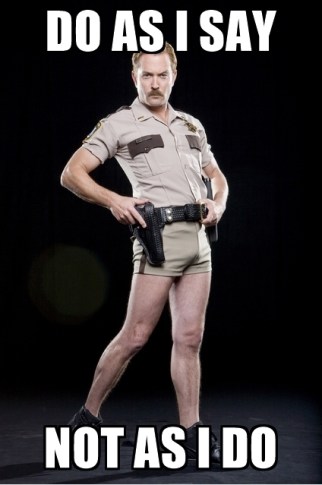
“Do as I say, not as I do” is a saying that is often associated with negative scenarios. A kid gets yelled at by their parents for saying a bad word, that they learned from hearing their parents say in the first place. A prosecutor being arrested for some heinous crime that he fought against for years. *Insert the story of any current politician resigning due to reason x, y, or z* You get the point.

PersonalTrainer2

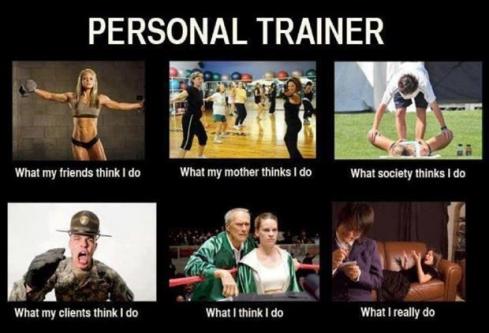
In personal training and coaching, however, I feel it’s much more common to encounter this situation. Some clients are elite-level athletes that are able to do things that their trainer could have never dreamed of doing themselves. Other coaches are past their own athletic prime, but have an incredible understanding of human performance. And then there’s the coaches who were never amazing athletes by their own right, but are simply incredible educators and motivators.

My old friend, Kevin Ogar (Owner of CrossFit Watchtower), always said that the best coaches were the second-tier athletes. Top tier athletes were typically so good, and so genetically gifted, that it would be hard for them to explain what comes so natural for them to others. Second tier athletes became good at their sport or craft because of years of hard work. Since they got to where they were through trial and error over time, they would often be more effective in helping others with progressions, and offering support through their trials and tribulations.

PersonalTrainer1

I had a conversation with a personal trainer last night who explained that he would never ask his clients to perform something he couldn’t do himself. Now, I understand the concept of what he was trying to say. Be responsible, don’t create absurd movements or circuits for your athletes that could get them hurt (which happens a lot in our industry), and so on. But I fundamentally disagree with him. In my opinion, being an effective coach means training and empowering others to perform to THEIR full potential safely. Not your own.

For example, in CrossFit the Strict Ring Muscle-Up is considered a fairly advanced movement.  I know dozens of trainers who aren’t able to this movement themselves. Does that mean that they should never teach others to do them, as long the movement and progressions are taught safely? To me, the answer is obvious.

This also brings the up to question of the physical appearance of the trainers, themselves. Some people love looking at trainers who are specimens of human perfection! Six pack abs, a booty strong enough to bounce a quarter ten feet in the air, arms or legs the size of tree trunks. But does the body of a trainer have anything to do with their ability to help others? I don’t think it does. Of course, there’s a distinction between a coach who is 80lbs overweight and eats fast food every day and someone who works out regularly and is still “normal person” healthy. I’m not suggesting that anyone wants to be coached by someone who has “really let themselves go,” merely saying that there isn’t necessarily a correlation between physique and effectiveness.

PersonalTrainer3

I know there’s no Right or Wrong answer to this topic, but I think it’s a really interesting one to discuss! Do you feel it’s important that trainers are able to do all of the things they ask of their clients? Do coaches need to look a certain way in order to be effective or credible? Let me know!

I love a good Flashback Friday post just as much as the next person. I have also posted a LOT of videos of myself working out over the last decade, so I’ve got quite the arsenal to pull from. Therefore, the first installment of my Flashback Friday series comes from one of the first workouts I ever did at CrossFit Lodo with my friend Grayson.

I’ve been doing CrossFit since September of 2008 (almost a decade now?!), but I’ve never had a coach. That means all of my barbell work was self-taught, and I’m still trying to break bad habits to this day. But man did I ever try hard.

The video below was taken two and a half YEARS into my CrossFit journey, and my technique is still so painful to watch! I just remember being so nervous to be in Grayson’s home gym, with his friends around, and wanting desperately to keep up. Well, when I was working out against someone whose nickname was Thor and looked like an action figure, let’s just say I was not able to keep up. What ensued, was some of the worst excuses for cleans I have ever seen. (Guys, did we all look like that back then? No? Just me? Ok, cool.)

BadForm

I know… I know…. It was bad.

Please only take this video as a fun little throwback of me and a friend working out, and do not try this at home! This is the “what not to do” video, not the proper example! So funny. Kind of. Since then, I can at least say that I’ve learned how Power Clean.

One of my favorite parts of CrossFit, is that it has introduced me to so many friends from all over the country and the world. I mean, I even met my wife through CrossFit! Thanks Grayson for making my first few years in this crazy sport of ours more fun. Enjoy, everyone!

If there’s one thing CrossFitters love, it’s buying new gear. Twelve pairs of shoes? Of course. Wrist wraps in every color of the rainbow? Yep. Headbands to match the Stance socks you choose for the day? Uh huh. That cute t-shirt with the clever saying that makes you laugh every time you read it? Well, I mean… it IS true that “Burpees hate you too”, so….

SwagUp2

With the 2018 CrossFit Games Open quickly approaching, it gives athletes the PERFECT excuse, rather opportunity, to step up their fresh and deck out their WOD gear! I’m pretty sure the Nano 412’s are gonna be released soon, and if you want to make your Toes to Bar a little easier, I think you know which kicks to pick up!

SwagUp1

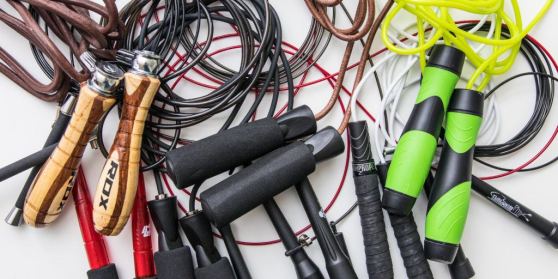
All jokes aside though, if you’re planning on upgrading any of your gear before the Open, the time is now. Finding a jump rope that you like can be a process. There’s nothing worse than showing up on Game Day still not knowing if you really like the rope in your hands. If you buy new shoes, it can take a few days or weeks to break them in. Are you going to experiment with working out with a belt on for the first time, or finally pick up a pair of those gymnastics wraps? Practice with them over the next few weeks first, so that by the Open you’ll know what you do or don’t like.

SwagUp4

Photo cred: WireCutter.com

When it comes to fashion, anytime is a good time to rock that new shirt or sports bra. But when it comes to function, I highly encourage you to take your time and accumulate gear that you really like, and helps you perform at your best! Quality over quantity. When it’s all said and done, if you start now, your squad will be looking like these two for workout 18.1! Happy Shopping!

A few days ago on this blog I mentioned how I’ve seen athletes push through fatigue to the point of getting injured because they convinced themselves it’s better to be able to put the #NoRestDays hashtag at the end of their Instagram posts than it is to take care of themselves properly. I made that comment kind of in jest, but it’s also true. It happens more often than you might think, and people will often push too hard because they see others doing the same.

NoRestDay1

To be honest, I don’t really have a problem with the #NoRestDays philosophy. What I do have a problem with, is people thinking that No Rest Days means that a person should lift heavy weights and push themselves to the max 7 days per week. I do not support that prescription. Instead, let me tell you what I do encourage. Doing things to promote recovery (such as self-guided stretching, mobility, and/or yoga), performing active rest (such as going for a slow jog, easy row, or casual ride on the Assault Bike, or body weight movements done at a low intensity just to keep the blood flowing, etc), easy skill work that doesn’t tax the nervous system too much, and self care (like massage, cupping, dry-needling) are always thing I support.

NoRestDay2

If you’re a Type-A personality that’s convinced that you absolutely must do something every day, then it’s fine. But, when you wake up and can barely get out of bed, or when it’s hard to get off of the toilet at work even when you use the railing in the stall, and when you walk around with your shoes untied because it hurts to much to bend over to tie them… then maybe you should simply rethink what it is you can do to still be productive. For those athletes who push their bodies hard all the time, remember that your body needs time to recover. You’ll see more even more gainz when you give those muscles time to rebuild stronger than before.

NoRestDay3

So next time your friends peer pressure you into doing “that one WOD I saw Rich Froning do four days ago” or when you decide to see if you can test all of the Wodapalooza workouts… in a single afternoon “just to see how you stack up,” ask yourself if the potential risk of getting hurt outweighs the ability to say “I would have placed third to last” to your friends. If your body is telling you that you should rest, usually you should listen. If you absolutely cannot take a “Rest Day,” then tell yourself that the 20 minute ROMWOD flow you picked out is your work for the day. When tomorrow comes, you can crush those weights all over again!

Stay safe. Keep your body as healthy as you can, since you only have one. Dedicate time to proper recovery. And as always, if there’s anything I can do to help, please let me know!